
Ask ten tree companies what they charge to remove a tree and you will get ten answers, and most of them are "it depends". That is true, but your customer still wants a number. Here is a method that gives you one and keeps every removal profitable.
What homeowners pay in 2026
These are typical US ranges for a single tree, cut down and cleaned up:
- Small tree, under 30 feet: $300 to $700
- Medium tree, 30 to 60 feet: $700 to $1,500
- Large tree, 60 to 80 feet: $1,500 to $3,000
- Very large or hazardous, over 80 feet or over a house: $3,000 to $6,000 and up
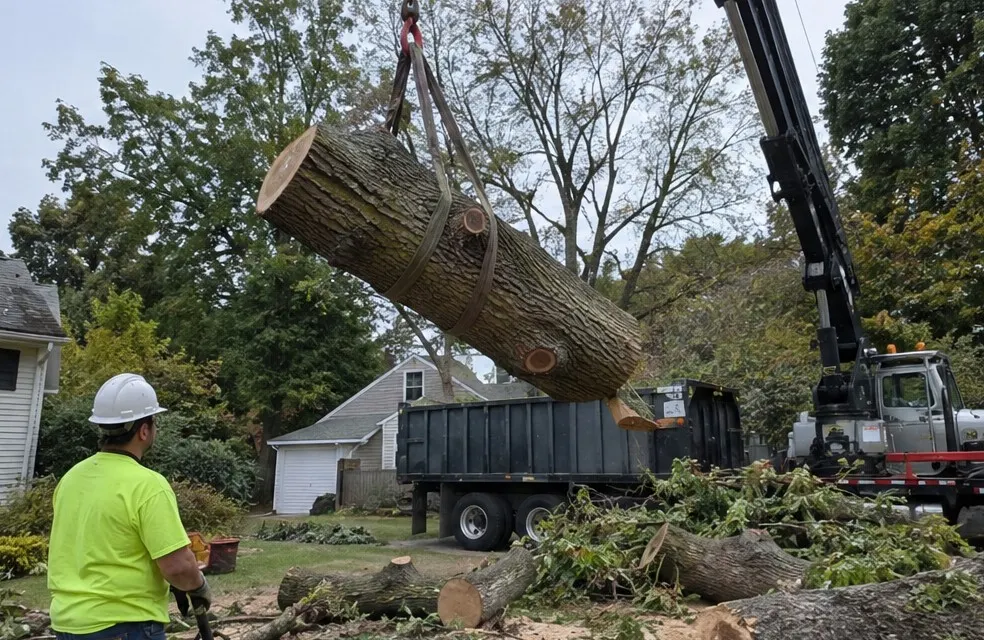
- Crane removal: often $4,000 to $10,000, because the crane alone can bill $250 to $500 an hour
Stump grinding is usually separate, and emergency work often costs 1.5 to 3 times the normal price. Prices run higher in big metros and lower in rural areas.
Step 1: know your crew day cost
Add up a normal month: wages and payroll taxes, workers' comp, general liability, truck and equipment payments, fuel, saw chains and repairs, dump fees, marketing and your phone. Divide by the days you actually cut. A small crew of three with a chipper often costs $1,000 to $1,800 a day to run. Add your margin and your day rate lands somewhere around $1,800 to $3,000.
Step 2: estimate the hours
Walk the job and ask how long it really takes, start to finish:
- Setup and safety briefing
- Climbing and rigging, or a straight drop if there is room
- Cutting, lowering and moving wood to the chipper
- Chipping, loading logs and raking
- Driving to the dump
A 45 foot oak in an open yard might be 3 hours for a crew of three. The same oak leaning over a pool with a 4 foot gate might be a full day.
Step 3: add the risk and the extras
Then adjust for what makes removals slower or more dangerous:
- Targets under the tree: roof, pool, fence, power lines. Rigging doubles the time
- Condition: dead, rotten or storm damaged wood breaks unpredictably
- Access: a chipper that cannot reach the backyard means carrying every limb
- Haul-away: leaving rounds for firewood is cheaper than taking everything
- Permits: if the city requires one, charge for the time to file it
Step 4: give a range before you go
Most homeowners call three companies. The one who gives a ballpark on the phone or on the website gets the visit, and the people who book already accept the range. An estimate calculator by tree count and height does that for you at 10 p.m. Then confirm the exact price on site.
Step 5: take a deposit on big jobs
For removals over $1,000, a 20 to 30 percent deposit holds the date and filters out the people who were only shopping. Send the balance invoice from the truck when the yard is clean. More in our guide on deposits and invoicing.
A worked example
A customer in Davie has a dead 50 foot oak 15 feet from the house, with the stump to grind and the wood hauled.
- Crew of three, about 5 hours including rigging off the roof side: $1,100
- Dump fees and fuel: $120
- Stump grinding, 24 inch diameter at $4 an inch: $96, rounded to the $150 minimum
- Haul-away of logs: included in the crew time
The quote: about $1,400 to $1,500. If the same call comes in at midnight after a storm, with the oak on the carport, it is an emergency job and $2,500 or more is fair.
When a crane makes sense
A crane costs money by the hour, but it can turn a two day climbing job into a four hour pick, with less risk to the crew and the house. When a big tree has no drop zone and leans over a roof, price the job both ways. Add the crane hours, the operator and the setup time, then compare it to the climbing days. Customers accept a crane price more easily when you explain that it keeps wood off their roof.
Mistakes that cost removals money
- Pricing by how much the last guy charged instead of by your hours
- Forgetting dump fees and the drive to the dump
- Not charging for permits or for moving patio furniture and cars
- Driving out to quote every small job with no range first
Use the free tree removal cost calculator to sanity check your numbers against typical rates.
Frequently asked questions
How much should I charge to cut down a tree?
Price from your crew day cost and the hours the job takes, then adjust for risk, access and haul-away. In most US markets that lands at $700 to $1,500 for a medium tree.
Should tree removal include stump grinding?
Quote it as a separate line. Many customers want it, but some do not, and showing it separately keeps your removal price competitive.
How do I price emergency tree removal?
Many companies charge 1.5 to 3 times their normal rate for storm, after-hours and hazard work, because the crew is called out and the work is more dangerous.