
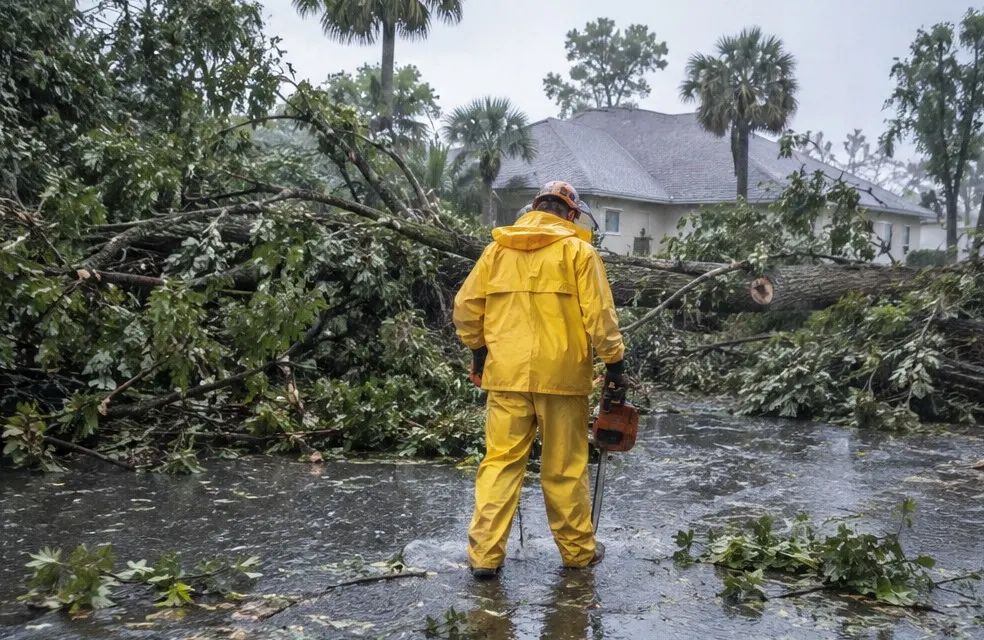
For a tree company in Florida and along the Gulf and Atlantic coasts, hurricane season runs from June 1 to November 30. It brings the year's best sales, the longest nights and the most chances to make a mistake. Here is how to plan it in three parts.
Before: March to May, sell prep work
Homeowners think about their trees when the first storm hits the news. Get there earlier.
- Hurricane prep trimming. Thinning dense canopies so wind passes through, removing deadwood and raising limbs off the roof. Price it per tree like any trimming job
- Dead and leaning tree removals. A dead pine next to a house is the first thing to fail in a storm
- Palm cleaning. Removing dead fronds and seed pods before they become projectiles
- Inspections. A 20 minute walk around the yard often turns into a $2,000 job
Publish a post and a page about storm prep in April, send a text to past customers, and hang door hangers on streets with big trees. Offer a small discount for work booked before June 1. More in tree trimming cost.
Before the storm: the 72 hours
When a named storm is coming, the phone fills with "can you come tomorrow". You cannot do them all. Prioritize dead trees and limbs over houses. Secure your own equipment, fuel the trucks and saws and charge every phone and radio. Set your voicemail and your answering service to storm mode: what you can do, when you will call back, and what to do if a line is down.
During and right after: the calls
The night the storm passes, homeowners call every tree company they can find, and the first one that answers usually gets the job. You will be asleep, or out on a job, or with no power.
This is where a 24/7 answering service earns its cost for the year. An AI receptionist answers every call with your company name, asks if anyone is hurt and if a line is down (and tells them to call 911 and the power company if so), takes the address and what the tree hit, gives your emergency range and texts it all to you. You wake up to a list sorted by urgency instead of 40 voicemails.
Triage the work
Not every call is equal. A simple order:
- Trees on occupied houses, blocking exits or on cars with people needing them
- Trees blocking driveways and roads for medical or work access
- Trees on fences, sheds and carports
- Downed trees in yards with no damage
Never touch trees in contact with power lines. That is utility work.
Emergency pricing, fairly
Storm work costs more to do. It is night work, dangerous, often with rigging off a damaged roof. Many companies charge 1.5 to 3 times their normal rate for emergency calls, or a call out fee plus hourly. Be clear before you start, put it in writing and take a deposit. Price gouging laws apply in many states during a declared emergency, so know the rules where you work. Homeowners remember who treated them fairly, and they leave reviews.
Insurance claims
Many homeowners will pay you and file with their insurer. Help them: photos before and after, an itemized invoice with what was removed from the structure, and your license and insurance details. Do not promise what their insurance will pay.
After: cleanup season
For weeks after a storm, the work is cleanup, broken limbs and leaning trees that did not fall. Keep your website and Google profile current with "storm cleanup" pages, and ask every storm customer for a review. Then send a note in spring about prep trimming. The customer you helped at 7 a.m. after the storm is the one who books every year.
Your own crew
Storm weeks are long, and tired climbers make mistakes. Set a hard stop each day, rotate who climbs, and do not take work your crew cannot do safely just because the money is good. One injury costs more than a month of storm work.
Out of town crews
After big storms, crews from other states arrive. Homeowners are warned about unlicensed workers, so make your license, insurance and local address obvious on every page and every invoice. See tree service insurance and licenses.
Frequently asked questions
When is hurricane season?
The Atlantic hurricane season officially runs from June 1 to November 30, with most storms from August to October.
How much more should I charge for storm work?
Many companies charge 1.5 to 3 times their normal rate for emergency and after-hours work. Be clear before you start and check price gouging rules during declared emergencies.
Should I remove trees touching power lines?
No. Trees in contact with power lines are utility work. Tell the homeowner to stay back and call the power company.